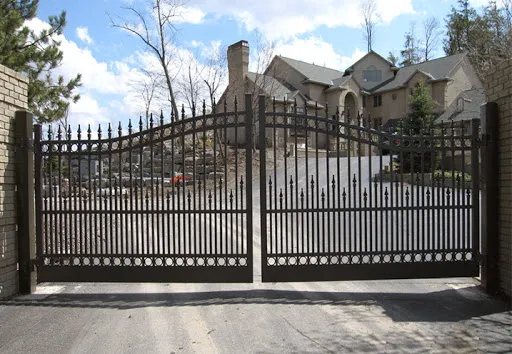
An ordinary back yard fence in Modesto normally does not need a building permit, but its height and location are set by the zoning code. A tall fence, a pool barrier or a powered gate is different. Each nearby city and the county has its own rules, and we check them for your address before work starts.
Do I need a permit to build or replace a fence?
Under the California building code, a fence over 7 feet tall needs a building permit. Stanislaus County's written fence policy says the same for county land, and adds that every pool barrier fence needs a permit and that electrical parts need an electrical permit. A like-for-like replacement at the same height and in the same place is generally treated the same as a new fence of that height, so if the old fence met the rules, the new one normally does too. Some cities are stricter: Patterson requires a fence permit for most new fences. Our town pages give the office for each.
How tall can my fence be? Is 6 feet allowed?
Yes in back and side yards. Modesto Municipal Code Section 10-4.406 caps walls and fences at 8 feet, and at 42 inches in the front yard and the street side yard. In unincorporated Stanislaus County the limit is 3 feet in the first 15 feet behind the front property line and 7 feet beyond that without a building permit. Corner lots must keep a clear view at the intersection. State law also treats a fence that unnecessarily exceeds 10 feet and was built out of malice to annoy a neighbor as a private nuisance (Civil Code section 841.4).
How close to the property line can I build? Do I need a survey?
A shared fence usually goes on the line, and a fence of your own goes just inside it. It cannot go in the public right-of-way, which often extends behind the sidewalk, or block an alley or irrigation easement. If the boundary is not marked, or the old fence wanders, get a plot plan or a survey before posts are set. Only a licensed land surveyor can mark the line.
I live in a historic district. What can I build?
Check with the Planning Division before you pick a style. A designated landmark or a property in a historic district may have extra review for changes seen from the street, and a front fence is one of them. We do not guess at this. We ask the city about the specific address.
Can my condo association or HOA restrict my fence?
Yes. Association rules on height, material, color and style apply in addition to the city code, and they are often tighter. Many newer tracts around Modesto, Salida and Manteca have them. Get the approval in writing before we order anything.
We are adding a pool. What fence does code require?
When a permit is issued to build or remodel a pool at a single-family home, California's Swimming Pool Safety Act requires at least two of seven safety features (Health and Safety Code section 115922). An enclosure is one. Section 115923 says the enclosure must be at least 60 inches high, sit no more than 2 inches off the ground, have no gap a 4-inch ball can pass through, and have nothing on the outside a small child could climb. Gates open away from the pool, close and latch on their own, and have the latch at least 60 inches up. The local building department inspects it and may add requirements.
The inspector failed my existing fence for the pool. Who brings it up to code?
A fence contractor can. Typical corrections are self-closing hinges and a self-latching latch at the right height, a gate turned around so it swings away from the water, boards or mesh added where soil has settled and left a gap, and short or climbable sections rebuilt. Give us the inspector's correction notice and we quote against that list.
My association only allows a 4-foot open fence, but I want privacy. What are my options?
Work inside the rules first. Shrubs or a hedge planted inside a 4-foot open fence give privacy without changing the fence. A taller screen set back near the patio may be treated differently from a fence on the lot line, so ask. After that, a written variance request to the board is the route. Look at your plot plan for utility or irrigation easements as well, since a fence in one may have to be removable.
Does farm or ranch fencing follow different rules?
Partly. Stanislaus County's fence policy exempts agricultural livestock fencing, such as woven wire and barbed wire on metal posts, from the building permit it requires for other fences over 7 feet. Zoning setbacks and road visibility rules still apply. Inside city limits, barbed wire and electric fence are restricted in most residential areas. Tell us whether the parcel is in a city or in the county.
Who calls 811 before digging, me or the contractor?
Whoever is doing the digging. Here that means contacting USA North 811, the call-before-you-dig centre for Northern and Central California. The request has to go in at least 2 working days before digging, not counting the day it is made, and the dig area has to be marked in white first. A ticket is good for 28 days. Utility companies mark the lines they own. If we build the fence, we make the request. Sprinkler pipe, pool plumbing, low-voltage lighting and gas lines to a barbecue are private and are not marked, so show us where they run.
My contractor wants to skip the permit and reuse the old holes. What is the risk?
You carry it, because it is your property. If a permit or approval was required and none was pulled, the city or county can stop work or make you change the fence, and it can surface again at sale. In California any job that needs a building permit also needs a licensed contractor, no matter how small the price. Old holes are also often the shallow ones that let the last fence lean.
The city says my existing fence breaks the current rules. Can I just repair it?
Ask the Planning Division before paying for anything. Cities often let an older fence be maintained where a full rebuild would have to meet the current code, but that decision belongs to the city, not to us.
We can only give a real number after seeing the fence line. The estimate is free. Call (209) 231-7679 or text us a photo of the yard.